

Having cataract eye surgery is a significant moment. Whether you have been waiting months for your procedure or are still considering it, it is natural to have questions about what happens afterwards.
Cataract surgery recovery is something many patients think about more than the surgery itself. That’s understandable. Knowing what to expect means fewer surprises, less anxiety and a smoother healing journey. Recovery varies from person to person. This guide covers what most patients experience, but your treating ophthalmologist’s individual advice should always take precedence.
This guide walks you through everything you need to know, from the moment you leave the clinic to the weeks that follow.
What is Cataract Surgery?
Before looking at recovery, it helps to understand what cataract eye surgery actually involves.
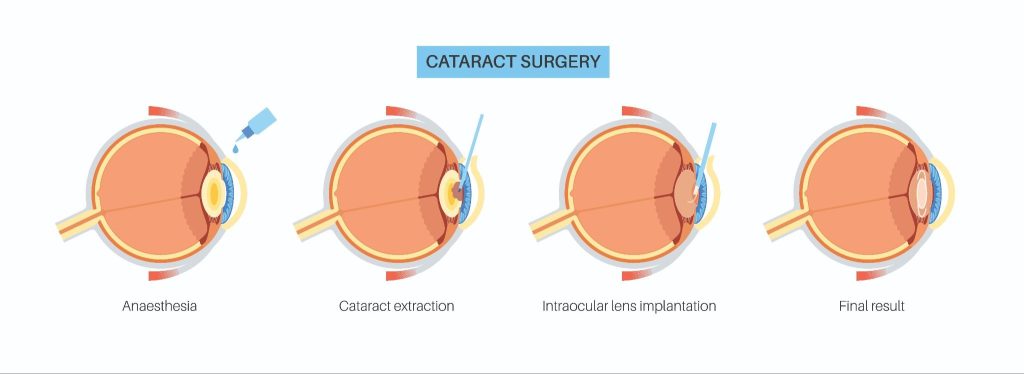
Cataract surgery is a routine operation. The eye’s cloudy natural lens is carefully removed and replaced with a clear artificial one, known as an intraocular lens or IOL. It is performed to restore clear vision that has gradually been lost as the lens becomes increasingly cloudy over time.
The procedure is carried out under local anaesthetic. You remain awake and comfortable throughout. It is one of the safest and most performed eye procedures in the world, but your eye still needs proper time to heal once it is done. That is where recovery begins.
What Happens During the Procedure?
Understanding the procedure helps put recovery into perspective.
During cataract eye surgery, a small incision is made in the eye. The cloudy lens is broken up using ultrasound technology, then gently removed. The new artificial lens is inserted and positioned in its place. The whole process typically takes around 15 to 30 minutes per eye.
The incisions used are small and usually self-sealing, but the surrounding tissues still need time to settle. Think of it in the same way as any healing process in the body. The procedure may be over quickly, but the eye needs several weeks to fully recover. That is completely normal.
What Should I Expect Immediately After Cataract Eye Surgery?
Most patients describe the hours immediately after cataract eye surgery as feeling a little strange rather than painful. The following symptoms are all common and expected, and each has a straightforward clinical explanation:
- A mild gritty sensation, or the feeling that something is in the eye – this is a normal response to the small incision and any temporary swelling as the eye begins to heal.
- Watering or mild redness – part of the eye’s natural healing response.
- Blurry or hazy vision – caused by temporary swelling of the cornea, and the eye adjusting to its new artificial lens.
- Sensitivity to light – the eye is now more exposed to light than it was through a cloudy, cataract-affected lens. Brightness can feel more intense while it adjusts.
- Colours appear more vivid than usual – cataracts cause a gradual yellowing effect that most people do not notice until it is gone. Once the cloudy lens is removed, colours often look brighter and cleaner.
None of this should cause alarm. These are all signs that your eye is beginning to settle after the procedure.
Your surgeon may place a protective shield over the eye before you leave. This helps prevent any accidental rubbing during those early hours.
You will also need someone to drive you home, as your vision will not be reliable straight away. Having a family member or friend with you for the first day or two is always a good idea.
How Long Does Cataract Surgery Recovery Take?
Rest assured, most patients recover quickly after cataract surgery. But healing speed can vary from person to person and can be influenced by any underlying eye conditions.
Vision often begins improving within 24 to 48 hours. Complete healing can take four to six weeks, and sometimes longer, depending on the individual. If you have any concerns about your healing process, get in touch with your ophthalmologist.
Cataract Surgery Recovery Timeline
Cataract surgery recovery happens in clear stages. Knowing what to expect at each one can make the process far less daunting. As with any recovery, these timings are a general guide rather than a fixed rule. Your own pace of healing may differ, and vision may fluctuate from day to day during the healing process before stabilising.
First 24 to 48 Hours
This is when your eye is doing the most active settling.
Blurry vision, mild discomfort and light sensitivity are all expected during this period. Begin your prescribed eye drops as directed, and rest as much as you comfortably can.
Many patients are surprised by how quickly they notice improvements, sometimes within the very first day.
First Week
Most people feel considerably more comfortable by the end of the first week. Vision continues to sharpen, redness fades and the eye begins to feel much more like its normal self.
Gentle daily activities such as reading, watching television and light tasks around the home are usually manageable. Always check with your surgeon before doing anything more demanding.
2 to 4 Weeks
Your eye is still healing during this stage, even if it feels almost back to normal. Follow-up appointments are important here. They allow your specialist to check that inflammation is settling properly and that everything is progressing as expected.
4 to 6 Weeks (and Beyond)
For most patients, cataract surgery recovery is considered complete at around the six-week mark. If your vision still needs fine-tuning, your eye specialist may recommend an updated glasses prescription at this point. Until then, try not to judge your final result too soon, as vision can continue to improve right up to this stage.
What Is Normal After Cataract Surgery?
It is natural to notice things about your vision that feel unfamiliar in the weeks after cataract eye surgery. Knowing which symptoms are expected and which need attention makes a real difference to your peace of mind.
Normal Symptoms After Cataract Surgery
The following are all normal parts of cataract surgery recovery for most patients:
- Mild redness and slight discomfort
- Temporary blurry or fluctuating vision
- Light sensitivity, particularly in bright conditions
- Mild watering or a gritty feeling
- Halos or glare around lights, especially at night
- Colours appearing brighter or more vivid than before
These symptoms should ease gradually as the weeks progress.
Posterior Capsule Opacification (PCO)
Some patients notice their vision becoming cloudy again weeks, months or even years after a successful cataract operation. This is usually due to a condition called posterior capsule opacification. The thin membrane left in place to support the new lens becomes cloudy over time.
It is important to know that this is not the cataract returning. Cataracts cannot come back once the natural lens has been removed. PCO is very common and straightforward to treat with a quick, painless outpatient procedure called YAG laser capsulotomy. This clears the cloudy membrane and restores vision.
Warning Signs You Should Not Ignore
Complications after cataract eye surgery are uncommon, but certain symptoms need prompt attention. Contact your eye specialist straight away if you notice any of the following:
- Severe or worsening pain
- Sudden vision loss
- Increased redness
- Persistent nausea or vomiting
- Significant swelling
- Thick discharge from the eye
Flashing lights, a sudden increase in floaters, or a curtain-like shadow across your vision need particularly urgent attention. These can be signs of retinal detachment, a serious condition that requires immediate assessment. This is separate from the usual post-surgical symptoms. It should never be left until a routine follow-up appointment.
These symptoms are not necessarily serious, but they do need to be assessed quickly. Never feel that you are overreacting by picking up the phone. That is exactly what your care team is there for.
Essential Cataract Surgery Recovery Tips
The way you care for your eye during recovery genuinely makes a difference. The good news is that the guidance is straightforward to follow.
1. Stay on Top of Your Eye Drops
Your prescribed drops are doing important work throughout cataract surgery recovery. Antibiotic drops help prevent infection at the incision site. Anti-inflammatory (steroid) drops keep swelling and irritation under control as the eye heals. Using them exactly as prescribed, at the right times and for the full course, gives your eye the best chance of healing smoothly.
Even if your eye feels fine, do not skip doses or stop early without speaking to your surgeon first.
2. Keep Your Hands Away from Your Eyes
Rubbing or touching the eye, even gently, can disrupt healing and introduce bacteria.
If your eye feels uncomfortable, slow blinking or preservative-free artificial tears can offer some relief. This is particularly helpful if you’re experiencing dry eye symptoms, which are common in the weeks after surgery.
3. Be Careful When Sleeping
Wearing your protective shield at night for at least the first week prevents you from accidentally rubbing your eye while asleep. Most people do this without realising.
4. Take It Easy with Physical Activity
Strenuous exercise, heavy lifting and any activity that involves straining should be avoided in the early weeks of cataract surgery recovery. These raise pressure in the eye.
Gentle walking is absolutely fine and is actually encouraged. Most surgeons advise waiting one to two weeks before returning to more vigorous exercise. Always confirm timing with your own specialist.
5. Protect Your Eyes from Irritants
The following should be avoided until your surgeon confirms it is safe:
- Swimming and hot tubs (usually for at least one to two weeks, to reduce infection risk)
- Eye makeup and creams near the eye (typically avoided for around a week)
- Dusty or smoky environments
When outdoors, a good pair of sunglasses will help manage light sensitivity and protect the eyes from wind and debris.
In the first week after surgery, when showering or bathing, make sure to avoid soap, shampoo or direct water getting in your operated eye.
When Can You Resume Normal Activities?
Most patients can return to many normal activities within a few days, including:
- Watching television
- Reading
- Walking
- Using digital devices
Other common questions patients ask include:
- Driving – you can usually resume once your vision meets the legal standard and you feel confident. Your specialist can confirm this at a follow-up check, often within a few days to a week.
- Returning to work – many people return within a few days for desk-based roles. Physically demanding jobs may need a week or two longer.
- Follow-up appointments – these are an important part of recovery. They allow your specialist to monitor healing and catch any issues early, so it’s worth attending even if your vision feels fine. These appointments are commonly scheduled during the first few days or weeks after surgery.
As always, driving, exercising, returning to work, swimming and other activities depend on your individual recovery progress. Check with your doctor before resuming anything strenuous or higher-risk.
Will I Still Need Glasses After Cataract Eye Surgery?
This is one of the most common questions patients ask before and after cataract eye surgery. The answer depends on the type of lens implanted and your individual vision needs.
Some patients find they still need glasses for close-up tasks such as reading. Others may need them for distance vision.
Your eye specialist will discuss the most suitable lens option for your lifestyle before surgery. They will review your vision at follow-up appointments.
It is important to wait until cataract surgery recovery is complete before getting a new glasses prescription. Your vision may continue to change during the healing process.
How Cataract Eye Surgery Can Change Your Life
It is easy to focus on cataract surgery recovery and overlook just how much the procedure can improve daily life. Patients often describe their results as transformative, enjoying benefits such as:
- Sharper, clearer vision
- Brighter and more vivid colours
- Improved confidence when driving, particularly at night
- Greater independence in everyday activities
- Reduced reliance on glasses in some cases
With proper aftercare, the results are often long-lasting and highly successful.
Support Throughout Your Cataract Surgery Recovery
Knowing you have expert support throughout your journey makes a real difference to how you feel before, during and after the procedure.
At Private Eye Care Services, patients receive dedicated guidance at every stage. This runs from the initial consultation and diagnostic assessment through to post-operative appointments and ongoing aftercare advice. Get in touch with our team to learn more.
If you have questions about whether it is the right option for you, or simply want to speak with someone who can give you clear, honest information, get in touch with our team. Getting the right advice early means you can approach your recovery with confidence. And remember: your treating ophthalmologist is always the best source of guidance for your individual situation.