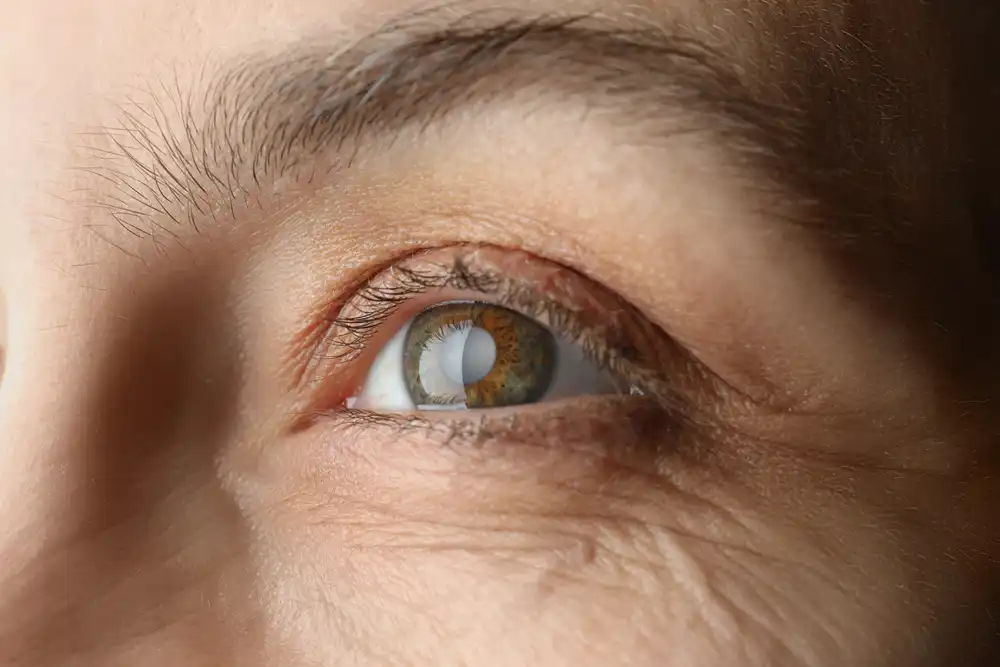
Cataract
Cloudy or dim vision can be a sign of cataracts, a common condition that can make everyday tasks more challenging. Cataract surgery is a safe and highly effective clinical procedure known for its ability to restore sight. Professional guidance throughout the process helps individuals navigate their options with confidence, ensuring a clear path toward restored vision and ease of daily life.

Eye Cataract
A cataract is a common, painless condition where the eye’s natural lens gradually becomes cloudy, making vision blurry or dim. While often related to ageing, cataracts can also result from injury or other medical conditions.
The lens helps focus light onto the retina, allowing you to see clearly. When it becomes cloudy, vision is affected, and glasses alone cannot fully correct it.
Cataract surgery is the only effective treatment. The procedure is quick, pain-free, and usually performed as a day case, meaning no overnight stay is required.
With safe and highly effective treatment available, there’s no need to struggle with poor vision. Cataract surgery can restore your sight with minimal disruption to your life.
Mr. Manu Mathew
Consultant Ophthalmic Surgeon
Mr. Mathew is a highly trained ophthalmic surgeon specialising in cataract, refractive lens, and laser eye surgery including LASIK and LASEK. He has performed hundreds of successful procedures and is well-regarded for his expertise across Nottingham, Birmingham, Leeds, and Wetherby.




Cataract Treatment
How Cataract Surgery is Performed
Step 1: Preparation – Your eye is numbed with local anaesthetic drops, and you may be given a mild sedative to help you relax.
Step 2: Incision – A tiny, precise incision is made in the eye to allow access to the cloudy lens.
Step 3: Lens Removal – The natural cloudy lens is carefully broken up and removed using advanced techniques.
Step 4: Lens Replacement – A clear artificial lens (IOL) is inserted to replace your natural lens.
Step 5: Closure – The incision is usually self-sealing, so stitches are rarely needed.
Step 6: Recovery – You’ll rest briefly after the procedure and receive instructions for post-operative care. Most patients notice improved vision within a few days.
Types of Cataract Surgery
A range of cataract surgery options is available, tailored to individual needs and lifestyle requirements. Specialist guidance helps in choosing the procedure that is most appropriate for each patient, ensuring a safe and effective path to restoring clear vision.
- YAG Laser Treatment – This is a quick, non-invasive procedure used to treat the clouding that can occasionally occur after cataract surgery, restoring clear vision without the need for further invasive surgery.
- Standard Cataract Surgery – This option involves replacing the cloudy natural lens with a high-quality monofocal lens to restore clear distance vision. While NHS surgery is typically performed on one eye at a time with a 6–12 week interval, private care standards often allow for bilateral treatment (both eyes on the same day). This can result in fewer clinical visits and a more streamlined recovery process.
- Enhanced Cataract Surgery – Utilising advanced techniques for greater precision, this approach aims to improve vision outcomes and reduce recovery time. Specialised toric lenses can be used to correct both the cataract and astigmatism in a single procedure, providing sharper distance vision.
- Advanced Cataract Treatment – Ideal for complex cases or individuals seeking premium lens options, this approach utilises cutting-edge technology and customised solutions to address vision at multiple distances. These treatments aim to significantly reduce or eliminate the reliance on glasses or contact lenses, providing greater visual freedom for activities such as reading, driving, or digital device use.
Specialist consultants provide the necessary guidance to ensure the chosen treatment aligns with an individual’s vision needs, lifestyle, and personal preferences.
Read our latest articles